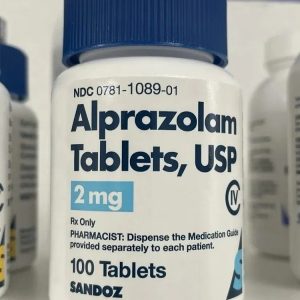
Alprazolam is a fast‑acting benzodiazepine that doctors prescribe to relieve symptoms of generalized anxiety disorder and panic disorder, including anxiety linked to depression. By boosting the effect of the neurotransmitter GABA at GABAAA receptors, alprazolam slows overactive brain activity, helping reduce feelings of fear, tension, and panic, but it can cause drowsiness, dizziness, and coordination problems, especially in older adults. Because alprazolam carries a risk of tolerance, dependence, misuse, and withdrawal, clinical guidelines recommend using the lowest effective dose for the shortest possible time, avoiding alcohol and other sedating medicines, and never changing the dose or stopping the medication without a supervised taper from a healthcare professional.https://medscaresolution.com/store
Alprazolam can slow or stop your breathing and fatal side effects can occur if you take this medicine with alcohol, opioid medicine, or other drugs that cause drowsiness or slow your breathing.
Do not stop using this medicine without asking your doctor. You may have life-threatening withdrawal symptoms if you stop using the medicine suddenly after long-term use. Some withdrawal symptoms may last up to 12 months or longer.
Take alprazolam exactly as prescribed by your doctor. Follow the directions on your prescription label and read all medication guides or instruction sheets. Never use alprazolam in larger amounts, or for longer than prescribed. Tell your doctor if you feel an increased urge to use more of alprazolam.
Never share this medicine with another person, especially someone with a history of drug abuse or addiction. MISUSE CAN CAUSE ADDICTION, OVERDOSE, OR DEATH. Keep the medication in a place where others cannot get to it. Selling or giving away this medicine is against the law.
Measure liquid medicine with the supplied measuring device (not a kitchen spoon).
Swallow the extended-release tablet whole and do not crush, chew, or break it.
Allow the orally disintegrating tablet to dissolve in your mouth without chewing.
Call your doctor if your symptoms do not improve, or if they get worse.
If you use this medicine long-term, you may need frequent medical tests.
Do not stop using alprazolam without asking your doctor. You may have life-threatening withdrawal symptoms if you stop using the medicine suddenly after long-term use.
Store at room temperature away from moisture, heat, and light. Keep your medicine in a place where no one can use it improperly.
Throw away any alprazolam liquid not used within 90 days. The National Institutes of Health (NIH) provides detailed information on benzodiazepines, their use, and associated risks.
Dosing information
Usual Adult Dose for Anxiety:
Immediate-release tablets/orally disintegrating tablets (ODT): 0.25 to 0.5 mg orally administered 3 times a day
-Maximum dose: 4 mg/day
Usual Adult Dose for Panic Disorder:
Immediate-release tablets/ODTs: 0.5 mg orally administered 3 times a day
-Maximum dose: 10 mg/day
Extended-release tablets:
-Initial dose: 0.5 to 1 mg orally once a day
-Maintenance dose: 3 to 6 mg orally per day, preferably in the morning
-Maximum dose: 10 mg/day
Usual Geriatric Dose for Anxiety:
Elderly or debilitated patients:
Immediate-release tablets/ODTs: 0.25 mg orally administered 2 or 3 times a day.
Usual Geriatric Dose for Panic Disorder:
Elderly or debilitated patients:
Immediate-release tablets/ODTs:
-Initial dose: 0.25 mg orally administered 2 or 3 times a day
Extended-release tablets:
-Initial dose: 0.5 mg orally once a day
Comments:
-If side effects develop, the dose may be lowered.
The World Health Organization (WHO) offers global guidance on the safe use of psychoactive medications.
-The lowest possible effective dose should be administered and the need for continued treatment reassessed frequently.https://medscaresolution.com/store
What happens if I miss a dose?|buy alprazolam online
Take the medicine as soon as you can, but skip the missed dose if it is almost time for your next dose. Do not take two doses at one time.
What happens if I overdose?
Seek emergency medical attention or call the Poison Help line at 1-800-222-1222. An overdose of alprazolam can be fatal if you take it with alcohol, opioid medicine, or other drugs that cause drowsiness or slow your breathing.
Overdose symptoms may include severe drowsiness, confusion, slurred speech, muscle weakness, loss of balance or coordination, feeling light-headed, slow heartbeats, weak or shallow breathing, fainting, or coma.https://medscaresolution.com/store
Frequently Asked Questions
- What is Alprazolam 2mg used for? Alprazolam (commonly known as Xanax) is prescribed for the treatment of anxiety disorders and panic attacks.
- Is Alprazolam legal in the United States? Yes, but it is a controlled substance and requires a prescription.
- What are the risks of using Alprazolam? Risks include drowsiness, dependence, impaired coordination, and withdrawal symptoms if stopped suddenly.
- How long does Alprazolam stay in your system? Alprazolam has a half‑life of about 11 hours, but metabolites may remain detectable for longer depending on testing methods.
- Is this content medical advice? No. This page is for informational purposes only and does not substitute professional medical guidance.
For related products, explore our Xanax 1mg and Diazepam 10mg sections.
Reviews
There are no reviews yet.